Two Non-Invasive Approaches, Different Layers
For a long time, "non-surgical facelift" in Melbourne meant one category: anti-wrinkle injectables. Botox and its equivalents (Dysport, Xeomin) became the default first answer for almost any face that started to look tired, frowning or lined. They work, they have decades of clinical data behind them, and they are not going anywhere.
What is changing is the conversation. There is a second category of non-invasive facial treatment that did not exist as a serious option ten years ago. Energy-based devices that combine radiofrequency, ultrasound or electromagnetic stimulation now address the part of the ageing face that injectables were never designed for: skin laxity, the SMAS layer underneath, jawline definition, and the slow descent of the midface.
Neither category replaces a surgical facelift. Both can sit alongside one another. The reason most people considering Botox don't realise the second category exists is that the marketing for it is much quieter, and the mechanism is harder to summarise in a sentence.
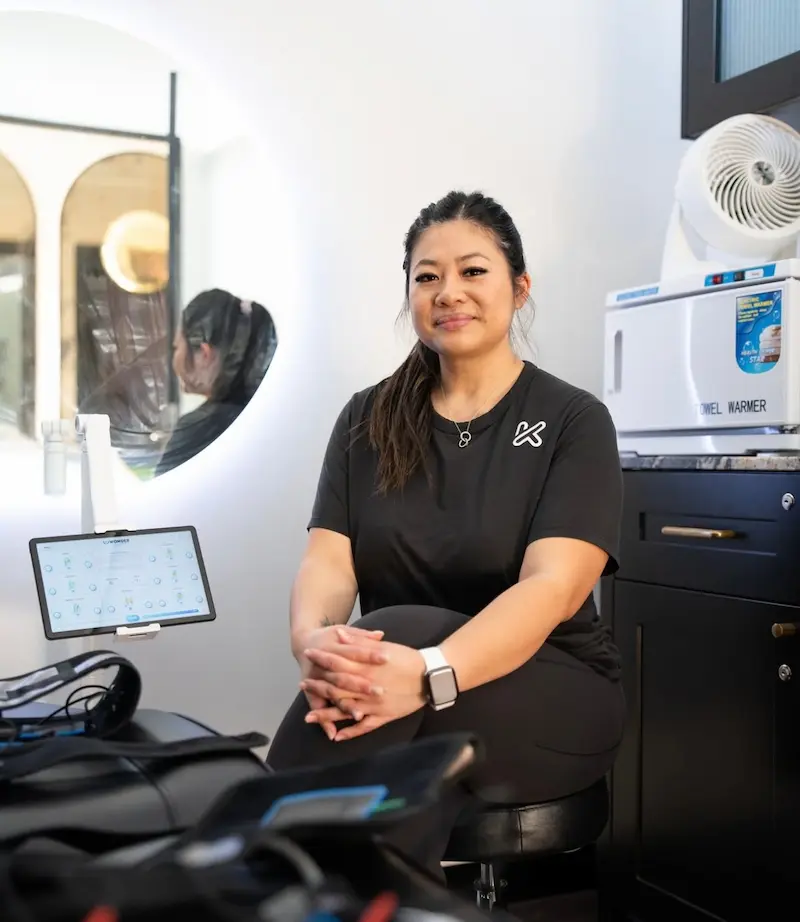
This article does the comparison the way an honest practitioner would do it in a consultation. What does each technology actually do at a tissue level? What does each one suit? And when do they stack rather than compete? We use WonderFace, the device we run at Kaizen Therapy, as the energy-based reference point because it is what we work with every day.
What Botulinum Toxin Actually Does
Botox, Dysport and Xeomin are all brand names for variants of the same active substance: botulinum toxin type A. It is a purified neurotoxin, supplied as a Schedule 4 prescription medicine in Australia and administered by a registered medical practitioner or appropriately credentialed nurse practitioner.
The mechanism is precise. When injected into a target muscle, the toxin blocks the release of acetylcholine at the neuromuscular junction. Acetylcholine is the chemical messenger that tells a muscle to contract. Block it, and the muscle stops contracting at that location. Allow the body's normal nerve regeneration to do its work, and contraction returns three to four months later.
That is why botulinum toxin is so effective at one specific job: softening the dynamic wrinkles caused by repeated muscle contraction. The frown line between your brows, the forehead lines that show up when you raise your eyebrows, the crow's feet that bracket your eyes when you smile. All three are creases formed by the same muscle pulling on the same skin thousands of times. Pause the muscle, and the crease softens. The skin above smooths out because it stops being folded against itself every time you have an expression.
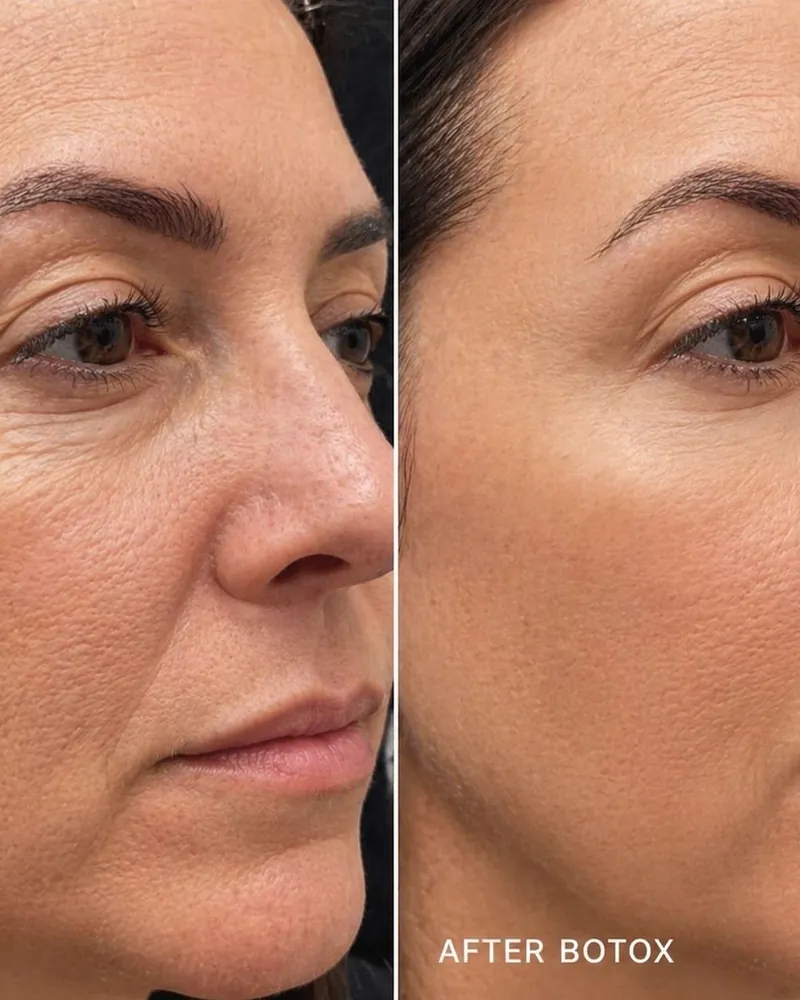
The timeline is predictable. Onset is three to seven days after injection. Peak effect lands at around two weeks. Duration sits at three to four months for most clients, after which the muscle starts contracting again and a top-up is required to maintain the look. Long-term users typically settle into a three or four monthly cycle.
What botulinum toxin does not do is equally important to understand. It does not tighten loose skin. It does not lift a descending midface or jawline. It does not restore lost volume in the cheeks (that is the indication for dermal filler). It does not improve skin texture, dullness or fine static lines that exist independent of muscle movement. If your concern is laxity rather than expression, no amount of botulinum toxin will fix it. That is a different category of problem with a different set of tools.
What WonderFace Actually Does
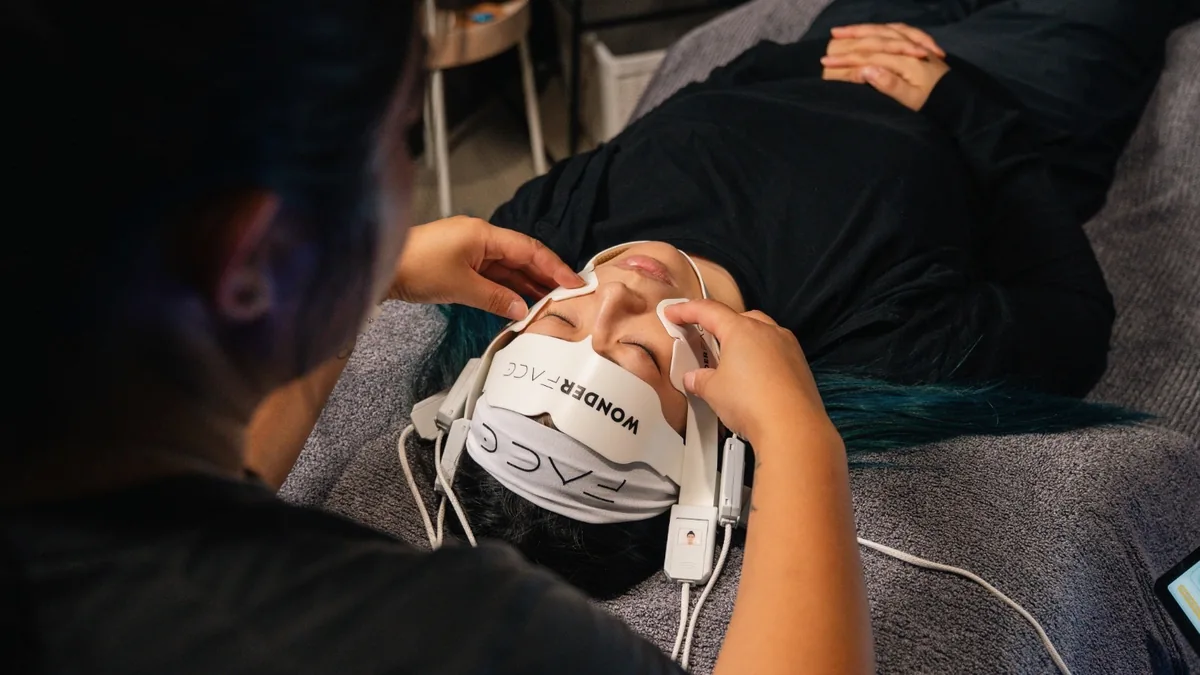
WonderFace is a Spanish-engineered, CE-certified device developed by Lexter Microelectronic Engineering Systems. The design point is what makes it interesting: it is the first facial device to combine synchronised bipolar radiofrequency with neuromuscular emissions in a single 25-minute session. Two mechanisms working together, on two different layers of the face, at the same time.
The radiofrequency component is bipolar, runs at 500 kHz, and heats the dermal layer to a controlled 42 to 44 degrees Celsius. At that temperature, the body initiates a thermal response in the skin: existing collagen contracts, and the fibroblasts that produce new collagen and elastin become activated. Across a course of sessions, the cumulative effect is a measurable improvement in skin firmness, fine line depth and texture. This is the same biological pathway used by every credible energy-based skin tightening device on the market. WonderFace runs it at a clinically tested intensity profile.
The neuromuscular emissions component is the part most clients have never encountered before. Each 25-minute session delivers approximately 1,500 controlled muscle contractions targeting the SMAS-layer facial muscles: frontalis, zygomaticus major and minor, platysma, risorius and the submandibular group. The SMAS, short for superficial musculoaponeurotic system, is the connective layer that gives the face its underlying shape. It is also the layer that surgeons reposition during a traditional facelift. Toning the muscles attached to it, non-invasively, addresses the structural support side of facial ageing in a way that radiofrequency alone cannot.
The treatment runs in three zones depending on the indication: frontal (forehead and brow lift), zygomatic (cheek and nasolabial area), and submaxillary (jawline and double chin). Most courses combine all three.
What WonderFace does well, based on the published evidence, is skin laxity, jawline definition, double chin reduction, midface lift, brow lift and overall skin texture. What it does not do is replace botulinum toxin for hyperactive expression wrinkles. If you have a deep glabellar line caused by 30 years of frowning, a course of WonderFace will improve the surrounding skin quality but it will not stop the muscle from frowning. That is what Botox is for.
Curious where WonderFace would fit for your face?
Book your free 15-minute in-person assessment. We'll review your skin, your muscle activity and your goals, and tell you honestly whether WonderFace is the right tool, the wrong one, or one part of a wider plan.
BOOK FREE ASSESSMENT →Side by Side: Layer by Layer
The fairest way to compare the two is to put them on the same axes and look at where each one wins.
| WonderFace | Botulinum toxin (Botox) | |
|---|---|---|
| Tissue layer | Dermis (RF) plus SMAS muscle (NMES) | Targeted superficial muscle at the neuromuscular junction |
| Muscle effect | Builds tone via involuntary contraction | Reduces contraction by blocking the nerve signal |
| Skin / collagen effect | Direct collagen and elastin remodelling | None directly; surface improves as folding stops |
| Best for | Skin laxity, jawline, double chin, midface lift, texture | Dynamic frown lines, forehead lines, crow's feet |
| Onset | Visible from session 1 or 2 | 3 to 7 days post-injection |
| Duration | Several months with regular maintenance | 3 to 4 months per treatment cycle |
| Invasive | No needles, no anaesthesia | Injection, prescription-only |
The two technologies are not in the same lane. WonderFace is a structural treatment that addresses skin and the muscle layer beneath it. Botulinum toxin is a focal treatment that pauses a specific muscle for a specific reason. Reading the table left to right, the question is not "which is better." The question is "which problem do you have."
Which One Suits You
If your concern is wrinkles when you make expressions
Frown lines that deepen when you concentrate, forehead lines that show up when you raise your eyebrows, crow's feet when you smile. This is the dynamic wrinkle pattern. Botulinum toxin is the first-line tool, performed by a registered injector. WonderFace will improve the skin quality around those lines, but the line itself is muscle-driven and will keep returning every time you have an expression.
If your concern is the skin and the jawline starting to descend
Cheeks feeling less defined than they were five years ago, the jawline blurring into the neck, the start of a double chin, skin that feels looser when you look in the mirror. This is the laxity-and-descent pattern. WonderFace was specifically designed for it. Botulinum toxin will not address skin laxity at all, because the cause is collagen loss and SMAS descent, not muscle hyperactivity.
If your concern is "all of the above"
Most readers in their late 30s and 40s sit here. There are some expression wrinkles, and there is some laxity, and there is some texture loss. The honest answer is that the two treatments do different jobs. Many of our WonderFace clients also see an injector for their glabellar lines, and many people who have been on a Botox cycle for years find that adding WonderFace addresses the part of their reflection the injectable was never going to fix. The two are complementary, not substitutes.
Can You Do Both?
Yes, with appropriate timing. They target different problems and there is published research suggesting the two technologies can work synergistically. A 2023 evaluation of combined energy-based facial treatment alongside botulinum toxin reported that pre-conditioning the muscle and skin with synchronised RF and NMES allowed the injector to achieve a comparable effect at a lower dose, and prolonged the duration of the result.
What we recommend in practice is a clean three-month gap between any recent botulinum toxin or filler injection and the start of a WonderFace course. The radiofrequency component can affect how injected product behaves in the tissue while it is still active, and the manufacturer guidance is conservative on this point. After the initial WonderFace course, ongoing maintenance and any future injectable cycles can be sequenced together at your assessment.
We do not recommend stacking as a default. The right starting point depends on what you want to change first. We will work that out with you at your free assessment, not before.
When Surgery Is the Honest Answer: Facelift and Neck Lift
Everything above is non-invasive, and there is a point on the ageing spectrum where nothing non-invasive is the right recommendation. Severe jowling with genuinely redundant skin, visible platysmal banding running down the neck, and deep structural descent of the midface are surgical indications. A neck lift repositions the platysma muscle, removes excess skin and restores the angle under the chin. A lower facelift extends the same repositioning up through the SMAS layer of the lower face. These are the procedures every energy device, including ours, is implicitly compared against. The costs are worth knowing.
Melbourne market pricing in 2026, based on published clinic pricing rather than Kaizen Therapy quotes: a neck lift sits at $35,000 to $40,000 all-inclusive at established practices; a combined lower facelift with neck lift runs $45,000 to $70,000 or more. Recovery is four to six weeks of visible bruising and swelling, with final settling at three to six months. The results are the most durable in this entire category, commonly lasting eight to twelve years. PDO thread lifts are often marketed as a middle path under the name "non-surgical facelift", but the published durability data is weak. A 160-patient review of dissolvable barbed sutures found the initial lift absent at twelve months.
What we tell clients at assessment: if your skin is genuinely redundant, a device course or an injectable cycle will produce subtle improvement and spend your money without resolving the thing you actually see in the mirror. If surgery is what your face needs, we will say so and step aside.
What the WonderFace Research Shows
WonderFace is supported by eight published studies covering more than 200 subjects across Croatia, Australia, Spain, Poland, the United States, Belgium and Pakistan. The largest single trial enrolled 85 subjects in Perth. The protocol is consistent across the studies: synchronised bipolar RF and neuromuscular emissions, 25-minute sessions, courses of six to twelve treatments depending on age and indication.
- 200+ subjects across 8 published studies in 7 countries
- Up to 50% reduction in wrinkle depth in clients aged 35 to 50
- 100% of subjects reported a visible lifting effect (Paper 1)
- 75% midface and cheek lifting response (85-subject Perth trial)
- 70% jawline definition improvement (85-subject Perth trial)
- Up to 25% increase in measured muscle tone after 8 to 12 sessions
- Validated across Fitzpatrick skin types I to V
- No serious adverse events recorded across any study
The research on WonderFace is non-comparative. It does not claim to be better than botulinum toxin, and we will not either. What it does establish is that the dual-layer mechanism produces measurable, repeatable results across a large and varied subject pool, with a safety profile limited to mild transient redness in most clients.
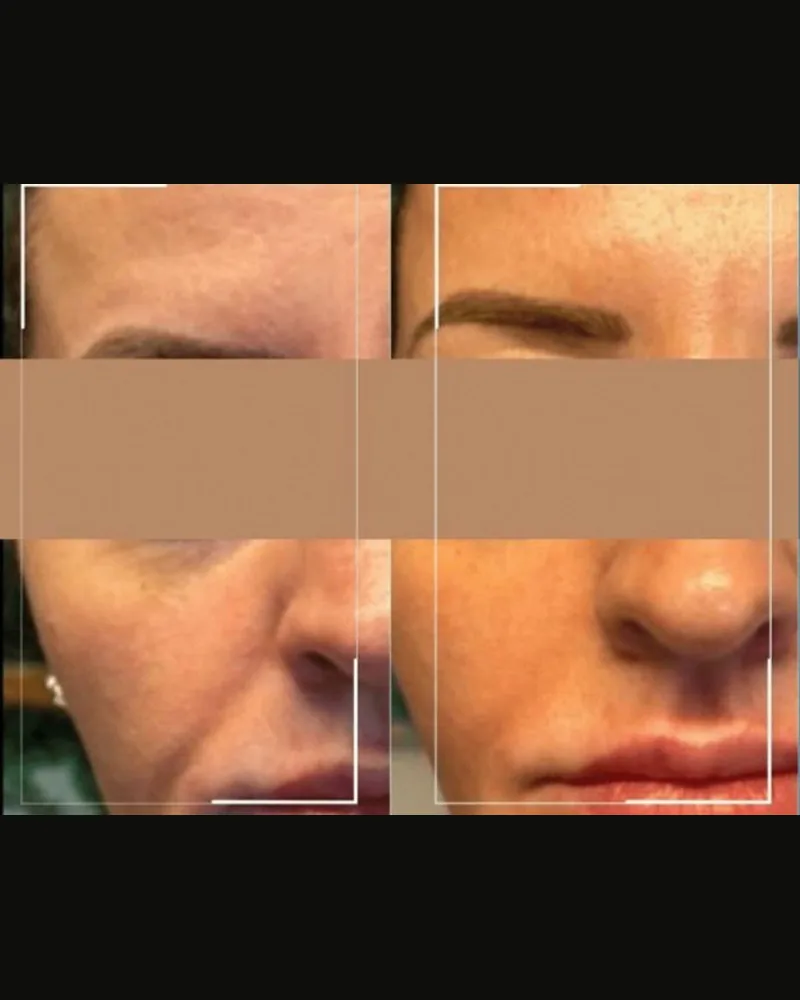
If you want to see more before-and-after comparisons across both body and face programs, our results gallery is the most complete reference we hold publicly.
Cost and Program Structure
WonderFace at Kaizen Therapy is delivered as a structured program rather than a single session, because the published evidence on results lives in the cumulative-course data, not in individual treatments. The two most common formats:
- 6-Week Facial Rejuvenation Program: $1,699. 12 WonderFace sessions delivered twice weekly across six weeks, with a skin and facial muscle assessment, progress photos at weeks 2, 4 and 6, one bonus maintenance session, and a satisfaction guarantee. Available as a payment plan from $142 per week.
- Ongoing maintenance from $199 per month. Once the program completes, monthly memberships maintain the result. Tiers run from one session per month at $199 to twice-weekly sessions at $999 per month, with no lock-in.
Your free 15-minute in-person assessment is where we confirm the program is the right fit for your skin and goals before anything is booked. The full breakdown lives on our pricing page.
Botulinum toxin pricing varies by clinic, by the registered injector, and by the unit count required for your specific muscle pattern. We do not quote injectable pricing because we do not perform injectables; the right number for you is a conversation with a credentialed cosmetic injector.
Face Lifting Treatment Near Me: Choosing in Melbourne
Proximity matters differently depending on which part of the face lifting category you are in. Cosmetic injectors are on practically every major shopping strip in Melbourne, and because a botulinum toxin cycle is one short visit every three to four months, distance barely matters; credentials matter. Surgical consultations concentrate around inner Melbourne, and you travel to a surgeon a handful of times regardless of where you live. Device-based courses are the case where "near me" genuinely matters, because a course only delivers its published results if you finish it.
The WonderFace program is twelve visits across six weeks, two per week. At that cadence the studio has to sit inside your normal weekly routine, and travel time is effectively part of the price. Kaizen Therapy is in Bentleigh, at Unit 1/85 Robert St, open seven days. For anyone searching from Bentleigh East, McKinnon, Ormond, Moorabbin, Brighton, Hampton, Cheltenham or Oakleigh, or anywhere across Glen Eira and Bayside, we are a short drive away. If you are elsewhere in Melbourne, the same rule applies wherever you book: choose the modality by the problem first, then choose the provider by whether you can realistically keep showing up.
Frequently Asked Questions
They use entirely different mechanisms. Botulinum toxin (the active ingredient in Botox, Dysport and Xeomin) is an injection that temporarily blocks the nerve signal to a specific muscle, so the muscle stops contracting and the dynamic wrinkle softens. WonderFace is a non-injectable device that combines bipolar radiofrequency, which heats the dermis to stimulate collagen and elastin, with neuromuscular emissions that tone the deeper SMAS-layer facial muscles. One pauses muscle activity. The other rebuilds the layer underneath the skin.
No. They treat different things. Botox is the standard of care for dynamic wrinkles caused by repeated muscle contraction, such as frown lines, forehead lines and crow's feet. WonderFace is designed for skin laxity, jawline definition, midface descent, double chin and overall skin texture. Many readers benefit from one. Some benefit from both. The honest answer is that the right modality depends on what you actually want to change.
The standard guidance from the WonderFace operator manual is to wait three months from any recent botulinum toxin or filler injection before starting a course. The radiofrequency component can affect how injected product behaves in the tissue, so timing matters. If you've had recent injectables, tell us at your free assessment. We will confirm a sensible start date together.
Partly. Dynamic wrinkles caused by chronic muscle hyperactivity, such as glabellar frown lines and crow's feet, are the indication where botulinum toxin is most effective. WonderFace primarily improves skin texture, jawline contour, midface lift and overall firmness. It does not target the dynamic crease pattern in the same way an injectable does. If your concern is purely expression-driven wrinkles, Botox is the better tool.
Most clients report visible change from session one or two and significant change by session four. The Kaizen Therapy program is 12 sessions delivered twice weekly across six weeks at $1,699, which puts the visible-results point at around week two. After the program, optional maintenance memberships from $199 per month extend the result. Your assessment includes a tailored plan based on your skin condition and goals.
Botox typically lasts three to four months, after which repeat injection is required to maintain the muscle-relaxing effect. WonderFace results, once a course is complete, are reported across published studies as lasting several months when paired with regular maintenance sessions. Both modalities require ongoing input. Neither is permanent, and we will never claim otherwise.
A surgical neck lift in Melbourne sits at $35,000 to $40,000 all-inclusive at established practices, and a combined lower facelift with neck lift runs $45,000 to $70,000 or more, with four to six weeks of recovery. It is the most durable option in the category, commonly lasting eight to twelve years, and it is the right tool for severe laxity with redundant skin and platysmal banding. By comparison, the WonderFace 6-Week Facial Rejuvenation Program at Kaizen Therapy is $1,699 for 12 sessions, and botulinum toxin cycles cost a few hundred dollars every three to four months depending on the injector and unit count. The honest comparison is not price alone: surgery treats severe structural change that no non-surgical option can resolve, while the non-surgical options treat earlier-stage laxity and expression lines with no downtime.
Published research has validated the device across Fitzpatrick skin types I to V with no serious adverse events recorded. The most common experience is mild transient redness for 15 to 30 minutes after a session, after which clients return to normal activity immediately. There is no anaesthesia, no needles and no recovery period. We always review your full medical history at your free assessment before starting any program.