The short version: five non-surgical categories treat the jowl line, and each one addresses a different part of why it forms. Creams and at-home devices work on the skin surface, which is the shallowest of the four changes behind a jowl. Some of them do real but limited things, and we go through what the evidence actually supports in our guide to at-home treatments for sagging jowls.
| Category | Best suited to |
|---|---|
| HIFU | Skin laxity with a mild jowl lift |
| RF microneedling | Lower-face laxity, texture, mild jawline definition |
| Bulk-heating RF | Early laxity and broad-area firming |
| Thread lifts | Mechanical lift, but limited durability evidence |
| EMS + RF (synchronised) | Skin laxity and muscle slackening together |
Why Jowls Form (and Why It Speeds Up at 40)
A jowl is not one tissue change. It is four overlapping ones, and they all start hitting at once between roughly age 35 and 55. Understanding which of the four is most active in your face is the thing that decides which treatment will actually help, because most of the options on the market only address one of them.
1. The cheek fat compartments change shape and position. Facial fat is not one mass. It sits in separate compartments, and with age some deflate while some shift downward toward the jaw line. Imaging studies show this is region-specific rather than a uniform slide, and losing volume higher in the cheek can create the appearance of descent even where little has actually moved. Either way, soft tissue ends up sitting where it did not used to sit, and that is what creates the visible jowl line.
2. The bone underneath the lower face thins. The prejowl sulcus, the small area of mandible directly in front of where the jowl forms, is one of the strongest predisposed-to-resorption zones in the entire facial skeleton. Less bone underneath means less structural support for the soft tissue above it, so the soft tissue bulges forward into the path of least resistance. After menopause this accelerates, because falling estrogen disinhibits the osteoclasts responsible for reabsorbing bone.
3. The connective tissue that anchors skin to the deeper layers lengthens. A 49-cadaver study led from Melbourne found that the fibres running through the jowl are not thinner or weaker with age. They are longer. The short, springy connective tissue that gives a 25-year-old face its mobility-without-laxity simply stretches out, and as it does, it stops holding the layers above it in their original position.
4. The dermis loses collagen and elastin. Before menopause, women lose roughly 1.0 to 1.5 percent of skin collagen per year. After menopause the loss tracks years since menopause rather than chronological age, running at roughly 1 to 2 percent per postmenopausal year, so the decline compounds fastest in the first decade after the change. Skin elasticity drops about 1.5 percent per year in early postmenopause, on top of the cumulative loss already in progress. The skin envelope becomes thinner and less able to retract over the changes happening underneath.
That is the picture: descending fat, retreating bone, lengthening ligaments, and a thinning, less elastic skin envelope. Four layers, and the deepest three sit well below anything you can apply at the bathroom sink.
Is There a Best Skin Cream for Sagging Jowls? An Honest Answer
"Best skin cream for sagging jowls" is one of the most-searched phrases in this category, so it deserves a straight answer rather than a product list. The only cream class with credible published evidence for skin ageing is the retinoid family: prescription tretinoin and over-the-counter retinol. Used consistently for months, retinoids measurably improve fine wrinkles, texture and pigmentation by stimulating collagen production in the upper dermis. That is real, and a good retinoid routine is worth keeping.
It is also the ceiling of what a cream can do. Firming creams built on peptides, caffeine or hyaluronic acid produce a temporary plumping and hydration effect that lasts hours, not months. And no topical of any kind reaches the three deeper changes that actually create a jowl: the redistributed fat compartment, the thinned mandibular bone, and the lengthened connective tissue. A cream works on the top fraction of one layer out of four.
The practical test is simple. If your concern is skin quality (fine lines, texture, dullness) a retinoid earns its bench space. If you can see or pinch a soft pouch along the jaw line, you are past what the skincare aisle sells. How to fix jowls at that point is a matching exercise: identify which of the four mechanisms is most active in your face, then pick from the treatment categories below. Every one of them can lift jowls without surgery to some degree. None come in a jar.
The Five Real Non-Surgical Categories
Every non-surgical jowl treatment marketed in Melbourne falls into one of five categories. The honest comparison sits at the level of mechanism, evidence, and durability. Names of devices change every two years; the categories do not.
1. HIFU (high-intensity focused ultrasound)
HIFU devices, of which Ultherapy and Ultraformer are the two most familiar names, deliver focused ultrasound energy at fixed depths of 1.5, 3.0 and 4.5 millimetres. The 4.5 mm depth reaches the SMAS layer at the upper face. The energy creates small, controlled coagulation zones that trigger collagen contraction and remodelling.
The evidence specifically for jowls is reasonable. A 2024 three-dimensional study analysed lift across seven facial aesthetic zones and recorded an average 2.90 mm lift in the jowl area, with the jawline and perioral zones showing the highest patient satisfaction scores. Patient satisfaction across studies sits above 78 percent. Effect peaks at 3 months and is generally maintained out to 6 months, with some studies extending to 18 months.
What HIFU does not do is address muscle slackening. The energy targets connective tissue and dermis. If the part of your jowl that bothers you is structural sag rather than skin laxity alone, single-mechanism HIFU will help less than the marketing suggests.
2. Radiofrequency microneedling
RF microneedling, most familiar by the brand name Morpheus8, combines fractional radiofrequency with insulated microneedles that penetrate the skin at depths between 1 and 8 millimetres depending on tip selection. The needles deliver RF energy through the skin surface to the deeper dermis and the upper subcutaneous layer.
For lower-face laxity, the evidence is the strongest in the lighter end of the non-surgical spectrum. A retrospective series of 247 patients reported a 1.4-point improvement on the Baker Face/Neck Classification scale with 93 percent patient satisfaction. A separate published series of 233 jawlines treated with RF microneedling recorded zero hyperpigmentation, hypopigmentation, scarring, or prolonged erythema. Standard course is three sessions spaced four weeks apart, with five to seven days of pinpoint redness per session.
RF microneedling can also be paired with radiofrequency-assisted lipolysis to reduce subcutaneous jowl fat, but that combination crosses into minor invasive territory and is not what most readers picturing "non-surgical" have in mind.
3. Bulk-heating radiofrequency (Thermage, Exilis and similar)
Monopolar and bipolar RF without microneedles. The energy heats the dermis broadly to stimulate collagen contraction and longer-term remodelling. More comfortable than RF microneedling, no needles, no recovery, but a less pronounced effect per session. Suitable for early laxity rather than visible jowls. Typically delivered as a single annual session for Thermage, or a course of weekly sessions for Exilis-class devices.
4. Thread lifts (PDO, PLLA, barbed sutures)
Mechanical lift through inserted barbed sutures that grip the underside of the soft tissue and pull it upward, with the dissolving suture material also stimulating localised collagen production over the months that follow.
The published evidence is the weakest of any category here. Most studies follow patients for less than 12 months. There are no studies beyond three years. A 160-patient review of dissolvable PDO barbed sutures concluded that all initial lifting and contouring was absent at 12 months. A 2025 meta-analysis of thread complications recorded swelling in 35 percent of cases, skin dimpling in 10 percent, paresthesia in 6 percent, and thread visibility or palpability in 4 percent.
Threads are not nothing, and an experienced injector will produce a better result than an inexperienced one. We do not perform thread lifts and we have no commercial reason to discourage them. But "lasts two years" is a marketing claim, not a research finding, and the durability data is the part of the conversation that often gets compressed at the consultation.
5. Synchronised RF plus neuromuscular emissions
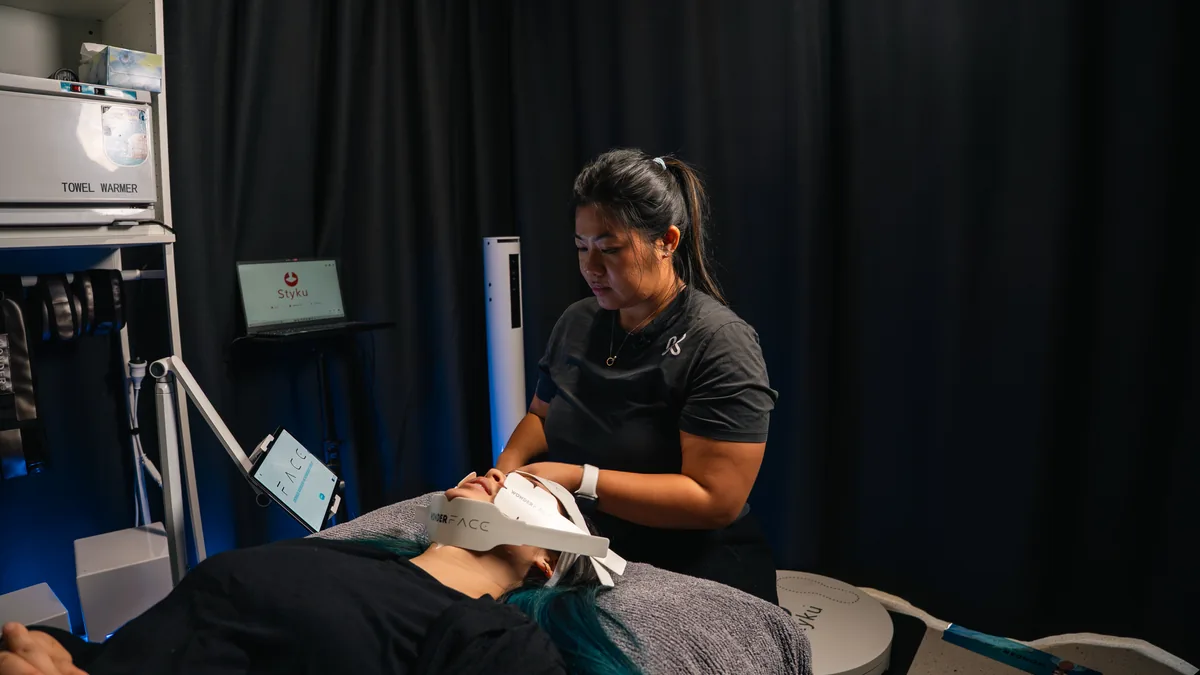
The newest of the five categories. Devices in this class combine bipolar radiofrequency, which heats the dermis to 42 to 44 degrees Celsius to drive neocollagenesis and neoelastinogenesis, with synchronised neuromuscular emissions that target the SMAS-layer facial muscles directly. Two mechanisms, two layers, one 25-minute session.
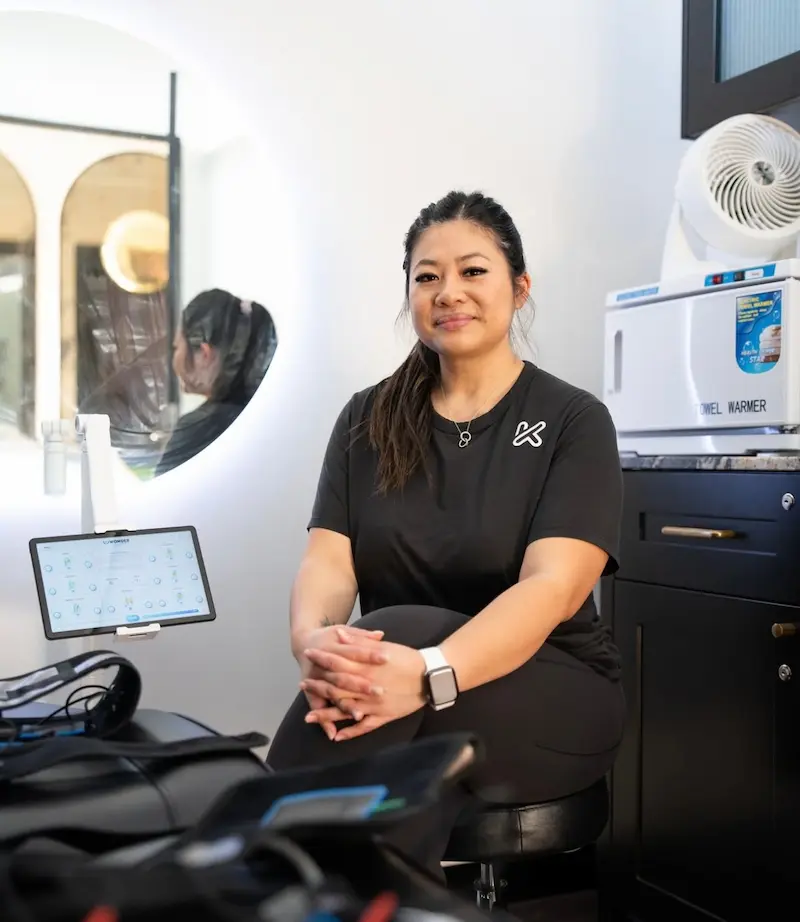
WonderFace, the device we run at Kaizen Therapy, is one of the most evidenced platforms in this category. Eight published studies covering 200+ subjects across Croatia, Australia, Spain, Poland, the United States, Belgium and Pakistan. The largest single trial enrolled 85 subjects in Perth. In the 35 to 50 age range, studies record up to 50 percent reduction in wrinkle depth, with 70 percent of subjects showing measurable jawline improvement and 75 percent showing midface lift in the Perth trial. The same studies recorded results around the eyes as well, with firmer limits on what the treatment can and cannot do there, which we cover separately in our guide to under-eye bags and puffiness.
What this category adds beyond HIFU and RF microneedling is the muscle layer. Approximately 1,500 controlled contractions per session target the platysma, zygomaticus major and minor, risorius and submandibular muscles. That is the same SMAS-layer set surgeons reposition during a traditional facelift, addressed non-invasively in a way single-mechanism energy treatments cannot match.
Honourable mention: dermal fillers
Filler is not a treatment for the jowl itself; it is a volumising tool that, used correctly, can lift the overlying tissue from above. Well-placed cheek filler in a face with genuine volume loss can soften the appearance of jowls by restoring midface support. Filler placed directly into the jowl, or filler in excess, produces the heaviness that has become the defining failure mode of the lower-face filler look. The right answer is "small, well-placed, and not in the jowl itself", delivered by an injector who will tell you no when the indication is wrong.
Want to know which category fits your face?
Book a free 15-minute in-person assessment at Kaizen Therapy in Bentleigh. We'll look at your skin, the muscle activity underneath, and the visible jowl line, and tell you honestly which category makes sense, including the categories we don't run ourselves.
BOOK FREE ASSESSMENT →Side by Side: Mechanism, Evidence, Durability
The fairest way to compare the five non-surgical categories is to put them on the same axes.
Durability numbers in the right-hand column are the most variable line. Read them as ranges, not promises, because individual response varies more between people than the category averages do.
| Category | What it treats | Evidence quality | Typical duration |
|---|---|---|---|
| HIFU | Skin laxity, mild jowl lift via SMAS-depth coagulation | Multiple peer-reviewed series; 78%+ satisfaction | 6 to 18 months |
| RF microneedling | Lower-face laxity, texture, mild jawline definition | 247-patient series; 93% satisfaction; safe across skin types | 12 to 18 months across a 3-session course |
| Bulk-heating RF | Early laxity, broad-area firming | Established; less data specific to jowls | 6 to 12 months |
| Thread lifts | Mechanical lift via inserted barbed sutures | Level III at best; no controlled studies beyond 12 months | Initial lift absent at 12 months in published reviews |
| Synchronised RF + NMES | Skin laxity AND SMAS-muscle slackening together | 8 published studies, 200+ subjects across 7 countries | Several months post-course with monthly maintenance |
Reading down the right-hand column, durability is genuinely modest across the board. Nothing non-surgical is permanent, and any practitioner who tells you it is permanent is overselling the science. What the table also makes visible is that the categories are not interchangeable. The right one depends on which of the four jowl mechanisms is most active in your face.
The Best Treatment for Sagging Jowls Depends on the Cause
If your concern is "my skin is loose, but the underlying shape still looks fine"
This is the early-laxity profile, often visible from the late 30s onward. The jaw line is still defined, the cheek still sits high, but the skin envelope has lost firmness and there is a soft loss of contour. HIFU or RF microneedling are sensible single-mechanism choices here. Bulk-heating RF is appropriate at the very early end of this profile. Synchronised RF plus NMES will also work but is more comprehensive than the indication strictly requires at this stage.
If your concern is "my lower face has started to descend"
This is the structural-descent profile, typically visible from the early 40s onward. The jaw line is no longer crisp, there is the start of a double chin, and the cheek volume seems to have moved southward. The muscle layer underneath has lost tone alongside the dermis. This is the profile that synchronised RF plus NMES was specifically designed for, because it addresses both layers in the same session. HIFU and RF microneedling will help but treat only one of the two layers involved.
If your concern is "I have lost volume above the jaw line"
This is the volume-loss profile. Cheeks look less rounded than they did a decade ago, light hits the face differently, and the jowl line has appeared partly because the support above it has receded. Small, well-placed cheek filler from a credentialed injector is the most direct tool. Pair it with a structural treatment for the jowl itself if there is also laxity. Filler alone is not a complete answer, and filler placed into the jowl is rarely the right move.
If your concern is "my jowls are advanced and the skin is genuinely redundant"
The honest answer here is plastic surgeon referral. Severe jowls with platysmal banding and excess skin are a surgical indication. Non-surgical options will produce subtle improvement and waste your money relative to the result available from a deep-plane facelift. We will say so at your assessment if that is what we see.
Where the Dual-Layer Approach Fits
We use WonderFace at Kaizen Therapy because it is the synchronised RF plus NMES platform with the most published evidence behind it. The bipolar RF component does the dermal collagen work that single-mechanism energy treatments also do. The synchronised neuromuscular emissions then deliver about 1,500 controlled contractions to the SMAS-layer muscles, which is the layer that single-mechanism treatments cannot reach.
- 200+ subjects across 8 published studies in 7 countries
- Up to 50% reduction in wrinkle depth in clients aged 35 to 50
- 70% jawline definition improvement (85-subject Perth trial)
- 75% midface and cheek lifting response (Perth trial)
- 100% of subjects reported a visible lifting effect (Paper 1)
- Up to 25% increase in measured muscle tone after 8 to 12 sessions
- Validated across Fitzpatrick skin types I to V, ages 25 to 70
- No serious adverse events recorded across any study
The evidence is non-comparative. WonderFace studies do not claim the device is better than HIFU, or RF microneedling, or threads, and we will not either. What the eight studies establish is that the dual-layer mechanism produces measurable, repeatable improvement in jawline definition, midface lift and skin texture across a large and varied subject pool, with a safety profile limited to mild transient redness in most clients.
If you want to see before-and-after comparisons across our face programs, our results gallery is the most complete reference we hold publicly.
Cost and Program Structure
WonderFace at Kaizen Therapy is sold as a single program because the published evidence on results lives in the cumulative-course data. The current offer:
- 6-Week Facial Rejuvenation: $1,699. 12 WonderFace sessions delivered twice weekly over six weeks, plus skin analysis, treatment plan, progress photos at weeks 2, 4 and 6, and one bonus maintenance session. Available as a payment plan from $142 per week. Backed by our satisfaction guarantee.
- Ongoing maintenance from $199 per month. Once the initial program is complete, monthly maintenance memberships keep the result. Tiers run from one session per month at $199 to twice-weekly sessions at $999 per month, with no lock-in.
The full breakdown lives on our pricing page. Your free 15-minute in-person assessment is where we confirm whether the 12-session program is the right fit for your skin and the degree of muscle laxity we see, before anything is booked.
For context on what the other categories cost in Melbourne in 2026 (market estimates, not Kaizen Therapy prices): HIFU sessions are typically priced $800 to $2,500 depending on facial coverage; RF microneedling courses run $1,800 to $4,500 for a three-session course; PDO thread lifts sit at $1,200 to $2,800 per session. We do not quote pricing for the categories we do not perform, because the right number for you is a conversation with the practitioner who will deliver the treatment.
Frequently Asked Questions
The first visible jowl line tends to appear in the late 30s to early 40s, though the underlying changes start much earlier. From around age 30, women lose 1.0 to 1.5 percent of skin collagen per year, the cheek fat compartments begin to deflate and shift toward the jaw line, and the bone of the prejowl sulcus starts to thin. The visible jowl is the point at which all three changes have progressed far enough to show. After menopause the rate of change accelerates, with skin collagen falling about 2.1 percent per postmenopausal year and skin elasticity declining roughly 1.5 percent per year in the early years.
For early to moderate jowling, yes. Several non-surgical categories have published evidence of measurable lift and tightening: HIFU, radiofrequency microneedling, bulk heating radiofrequency, and synchronised RF plus neuromuscular emissions. None of them replace a deep-plane facelift for severe jowling with redundant skin. What they do well is treat the layers that produce early jowls before those layers reach the point that requires surgery. The right tool depends on which layer of your face has changed most.
No cream can fix a jowl, because a jowl is produced by four tissue changes and three of them sit far below the reach of anything topical: redistributed cheek fat, thinned jaw bone, and lengthened connective tissue. The only cream class with credible published evidence for skin ageing is the retinoid family (tretinoin and retinol), which improves fine wrinkles, texture and pigmentation in the upper dermis over months of consistent use. That makes a retinoid worth keeping for skin quality. Firming creams based on peptides, caffeine or hyaluronic acid produce a temporary plumping effect that lasts hours. If you can see or pinch a soft pouch along the jaw line, the realistic options are the energy-based and muscle-based treatment categories, not skincare.
The published evidence on barbed PDO sutures is weaker than the marketing suggests. Most studies follow patients for less than 12 months, and a 160-patient review of dissolvable barbed sutures found that all initial lifting and contouring was absent at 12 months. A 2025 meta-analysis recorded swelling in 35 percent of cases, skin dimpling in 10 percent, and thread visibility or palpability in 4 percent. We do not perform threads at Kaizen Therapy and we have no commercial reason to discourage them, but the durability data is the part of the conversation that often gets skipped at the consultation.
Yes, modestly and temporarily. A 2024 three-dimensional analysis of HIFU-treated faces recorded a 2.90 millimetre average lift in the jowl area, with patient satisfaction above 78 percent and the highest improvement scores in the jawline and perioral zones. The effect peaks around three months and is generally maintained out to six months. Some studies report improvement out to 18 months. HIFU is a credible single-mechanism option for skin laxity. It does not address the muscle slackening that often sits underneath the visible jowl line.
WonderFace adds a second mechanism in the same session. The bipolar radiofrequency component does the dermal collagen and elastin work that HIFU and RF microneedling also do, just through different energy. The neuromuscular emissions component then delivers approximately 1,500 controlled contractions to the SMAS-layer facial muscles, including the platysma, zygomaticus and submandibular group. That is the same muscle layer surgeons reposition during a traditional facelift, and it is the layer single-modality energy treatments cannot reach. For clients whose jowling reflects muscle slackening as well as skin laxity, treating both layers together is the structural difference.
Most clients report visible change from session one or two and significant change by session four. The Kaizen Therapy program is 12 sessions over six weeks at twice-weekly cadence ($1,699), followed by optional maintenance memberships from $199 per month if you want to extend the result. Your free assessment confirms the program is the right fit for your skin and the degree of muscle laxity before anything is booked.
Yes. Published research has validated the device across Fitzpatrick skin types I to V and across the 25 to 70 age range, with no serious adverse events recorded. The most common experience is mild transient redness for 15 to 30 minutes after a session, after which clients return to normal activity immediately. Standard contraindications still apply (pregnancy, pacemakers, metallic implants in the treatment area, recent injectables in the prior three months). We always review your full medical history at your free assessment before starting any program.