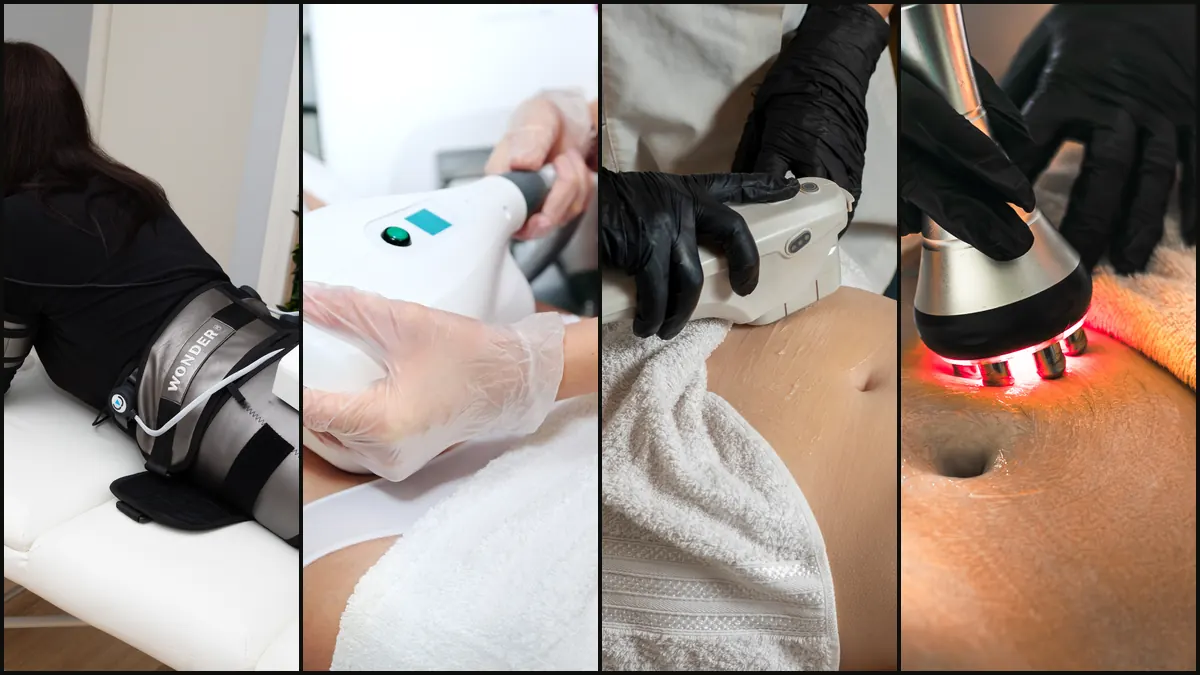
You've narrowed it to non-surgical fat removal. Four technologies dominate the Melbourne market: EMS body sculpting, fat freezing (cryolipolysis), HIFU, and ultrasound cavitation. Every clinic selling one of them will tell you it's the best option. This post does something different. It puts all four side by side, explains the mechanism behind each, and tells you honestly which situations each one actually suits.
The short version: they're not interchangeable. They target different things through different mechanisms, and choosing the wrong one for your goal is a common and expensive mistake.
The Four Technologies
EMS Body Sculpting (WonderAxon)
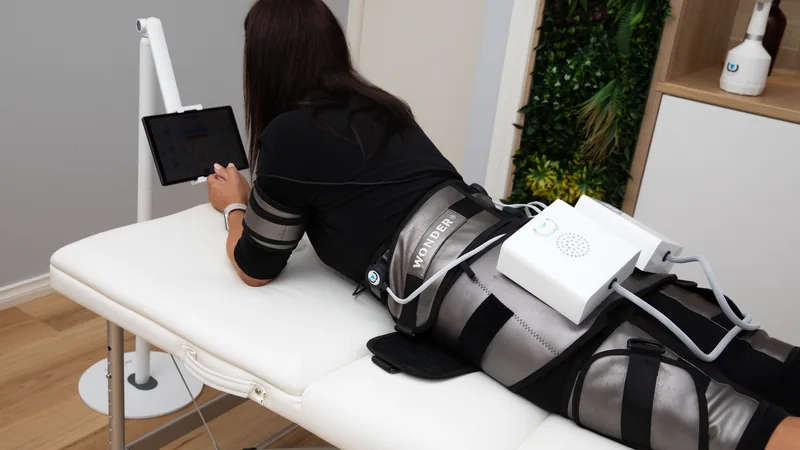
EMS body sculpting uses high-intensity focused electromagnetic energy (HIFEM) operating at 1.5 Tesla to drive involuntary muscle contractions. In a single 25-minute session, the device produces 36,000 to 52,000 supramaximal contractions: contractions that exceed what voluntary effort can generate, because the electromagnetic field bypasses the central nervous system's normal governor.
WonderAxon combines that HIFEM stimulus with simultaneous bipolar radiofrequency at 500 kHz and 15W. The RF component heats subcutaneous fat while the muscle work is happening. So in one session you get three things at once: fat reduction from the RF heat, muscle hypertrophy from the contractile stimulus, and collagen remodelling in the dermis from the same RF energy.
What it targets: fat reduction, muscle building, and skin tightening simultaneously.
Session time: 25 minutes, covering the full body treatment area.
Course: 24 sessions over 12 weeks — see the full body sculpting program in Melbourne.
What about EMSCULPT Neo?
EMSCULPT Neo is the best-known brand name in this category, and if you have been comparing body sculpting options in Melbourne you have almost certainly seen it advertised. It belongs to the same technology family as WonderAxon: high-intensity electromagnetic muscle stimulation combined with radiofrequency in a single applicator. The mechanism is the same class. The meaningful differences are in delivery, not biology.
EMSCULPT Neo is typically sold per body area as a short course of around four sessions over two weeks, priced per area at most Melbourne clinics. WonderAxon body sculpting at Kaizen Therapy runs as a 24-session program over 12 weeks at $2,399, covering the full treatment area, with the longer cadence built around progressive muscle adaptation. If you are weighing the two, the comparison that matters is total cost for every area you actually want treated, and whether a two-week blast or a twelve-week program fits how your body builds muscle. We are obviously not neutral here, so take this paragraph as orientation and price both options for your own treatment plan.
Fat Freezing / Cryolipolysis
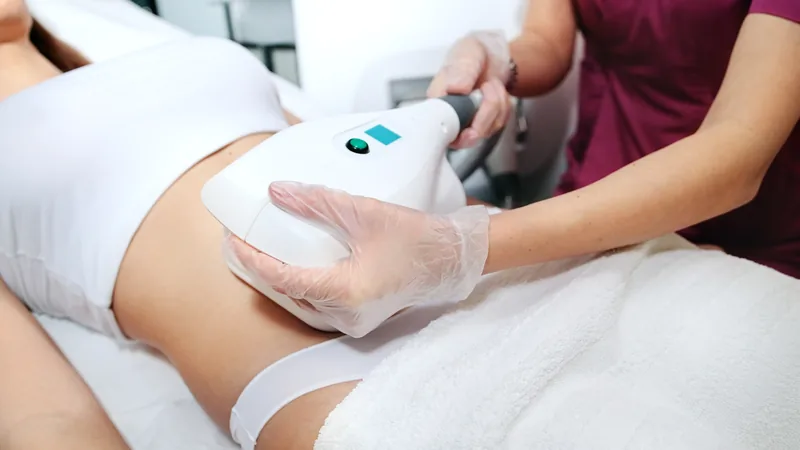
Cryolipolysis, the technology behind branded devices like CoolSculpting, works by cooling a localised area of subcutaneous fat to approximately −11°C. At that temperature, fat cells crystallise and undergo apoptosis: they die. The body then eliminates those dead cells through the lymphatic system over the following two to three months. Because fat cells freeze at a higher temperature than surrounding tissue (muscle, nerves, skin), the process is selective.
The result is a permanent reduction in fat cell count in the treated area. Once a fat cell is gone, it's gone. The limitation is scope: one applicator covers one area per session, and there's no effect on muscle or skin tightening.
What it targets: localised fat pockets only. No muscle benefit. No skin tightening.
Session time: 35–60 minutes per area.
Course: 1–3 sessions per area, 4–12 weeks apart.
HIFU (High-Intensity Focused Ultrasound)
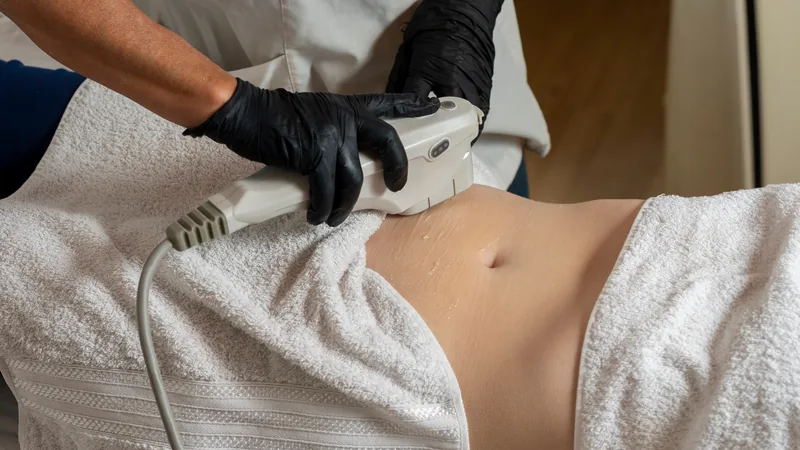
HIFU focuses ultrasound beams to heat tissue at precise depths, typically 1.3 to 1.6 cm below the skin surface, which is where the superficial fat layer and the fibromuscular SMAS layer sit. The heat at the focal point disrupts fat cells and triggers a wound-healing collagen response in the surrounding tissue.
That collagen response is what gives HIFU a mild skin-tightening effect that fat freezing lacks. It's not a primary tightening treatment, but it's a secondary benefit that can be clinically meaningful for patients with mild skin laxity alongside localised fat. There's no muscle-building component.
What it targets: fat reduction with mild skin tightening. No muscle benefit.
Session time: 30–60 minutes per area.
Course: 1–3 sessions, 6–12 weeks apart.
Ultrasound Cavitation
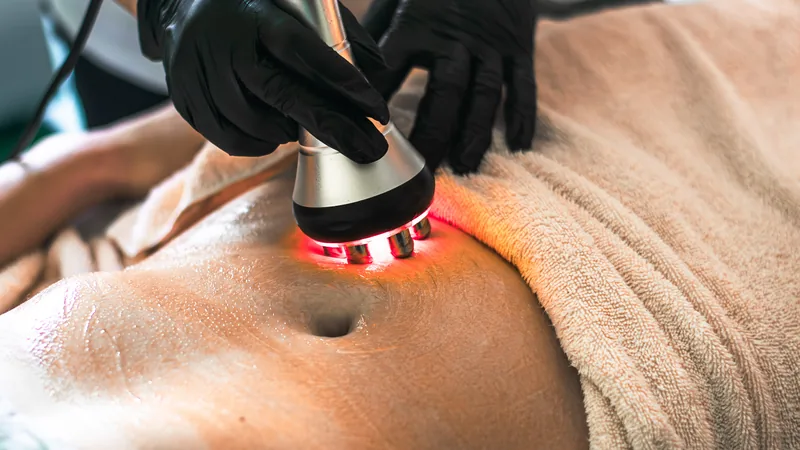
Ultrasound cavitation delivers low-frequency ultrasound waves (20–60 kHz) into the fat layer. Those waves create microscopic bubbles, called cavities, that expand and collapse rapidly. The mechanical force of that collapse disrupts the membranes of surrounding fat cells, releasing their contents into the interstitial fluid. The body's lymphatic system then processes and eliminates the released fat.
Cavitation is the most accessible entry point on cost and commitment. Sessions are shorter and cheaper than the other three options. The trade-off is that results are more incremental, you need more sessions, and fat cells are disrupted rather than destroyed outright, so the permanence isn't equivalent to cryolipolysis. There's no muscle effect and no collagen response.
What it targets: fat reduction only. No muscle. No skin tightening.
Session time: 20–40 minutes per area.
Course: 6–12 sessions, 1–2 per week.
Side-by-Side Comparison
| Factor | EMS (WonderAxon) | Fat Freezing | HIFU | Cavitation |
|---|---|---|---|---|
| Reduces fat | ✓ | ✓ | ✓ | ✓ |
| Builds muscle | ✓ | ✗ | ✗ | ✗ |
| Tightens skin | ✓ | ✗ | Mild | ✗ |
| Session time | 25 min | 35–60 min/area | 30–60 min/area | 20–40 min/area |
| Areas per session | Full body | 1 area | 1 area | 1 area |
| Sessions needed | 24 (12 weeks) | 1–3 per area | 1–3 | 6–12 |
| Downtime | None | Mild swelling 1–2 weeks | Mild redness | None |
| Results visible | Session 2+ | 2–3 months | 2–3 months | 4–6 weeks |
| Melbourne price range | $200/week program | $600–$1,200/area | $500–$1,500/area | $100–$300/session |
Melbourne market price estimates as of early 2026. Individual clinic pricing varies.
Which Is Right for You?
The technology you choose should match what you're actually trying to achieve. Here's the honest breakdown:
You want to lose fat and build muscle at the same time
EMS is the only option here. It's the only technology that produces both outcomes in the same session through the same mechanism. The other three address fat through different pathways but have zero effect on muscle tissue. If body recomposition, not just fat reduction, is the goal, EMS is the answer.
You have one stubborn fat pocket you want gone
Fat freezing (CoolSculpting and similar devices) is a strong option. The mechanism is well-studied, the permanence is genuine (dead fat cells don't regrow), and for a specific discrete area that hasn't responded to diet or exercise, it does what it says. One to two sessions per area is typically enough.
You want skin tightening alongside some fat reduction
HIFU is the better choice over fat freezing here. The collagen response from focused ultrasound gives you a skin-tightening effect that cryolipolysis doesn't. EMS also delivers skin tightening through its RF component, but if fat loss is the primary goal and skin tightening is secondary, HIFU is a reasonable middle ground before committing to an EMS program.
You want a low-cost option to try first
Cavitation is the lowest barrier to entry. Per session it's the cheapest, there's no downtime, and it's widely available across Melbourne. Just go in with clear expectations: the results per session are modest, you'll need a course of treatments, and the outcome is fat disruption rather than the more definitive outcomes of freezing, HIFU or EMS.
You've lost weight on medication and need body recomposition
Read our post on body contouring after weight loss medication first. The pattern of muscle loss that comes with rapid medication-assisted weight loss makes EMS, not the fat-only options, the right tool. You're not just trying to reduce fat; you're trying to rebuild the muscle that came off alongside it. Our Restore program is designed specifically for this.
Not sure which option suits your body?
Book a free assessment. We'll scan your body composition and give you an honest recommendation.
BOOK FREE ASSESSMENT →What the Research Says
The clinical literature on EMS body sculpting is the most substantial of the four technologies when it comes to multi-outcome studies: trials that measure fat, muscle and circumference simultaneously rather than just one marker.
The strongest feasibility data we hold comes from Barajas et al. (2022), a multi-centred prospective trial run across Spain, Colombia, Mexico and Croatia, using a protocol close to ours: twice-weekly sessions over 8–12 weeks.
- Abdominal circumference: 5–15.5 cm reduction (mean ~10 cm)
- Waist circumference: average 5.35 cm reduction
- Buttock circumference: 3–11 cm reduction (mean 7 cm)
- Weight loss: mean 9.5 kg over 8 weeks
- Body fat index: −2.345 percentage points
- Muscle mass index: +2.0 percentage points
- Patient satisfaction: 100% across all 7 studies
The authors noted that results were "much greater than heat or cold fat reduction treatments combined with extremely intensive physical training." The comparison is relevant here: they were explicitly benchmarking EMS against the thermal modalities (which include HIFU and the thermal-adjacent cavitation category) and finding the EMS outcomes superior across body composition metrics.
One finding that runs counter to what many people expect: overweight patients showed more significant results than patients closer to a healthy BMI. That's the opposite of the pattern with thermal treatments, where outcomes tend to be better on thinner patients with smaller, more accessible fat deposits. EMS drives results through muscular and metabolic mechanisms that scale with the patient's baseline, not against it.
"Results are much greater than heat or cold fat reduction treatments combined with extremely intensive physical training." — Barajas et al. (2022)
Studies cited
- Barajas, M.A. (2022). Feasibility Study for the Use of Electromagnetic and Neuromuscular Muscle Stimulation as a Combination Therapy for Body Contouring, with Wonder Devices. Santander University Hospital, Colombia. 12 patients, multi-centred prospective trial.
- González Álvarez, O. & Guillen Vargas, M. Effect of WONDER Muscle Recovery Therapy among Middle-Aged People: Analytical Study on 40 Patients. Guadalajara, México. 40 patients, retrospective analytical study.
- Ramírez Milan, O. (2020). Muscle Mass Increase and Fat Loss Therapy with Wonder Technology: Electromagnetic and Electrostimulation Combined Emissions. KMG Human Technology, Madrid.
- Cruz Onos, A. (2020). Physiological Approach to Muscle and Toning Therapy with Wonder® MT Device. Lucero Clinic, Madrid.
- Valdivia Calero, Y. (2019). The Importance of Buttock Muscles and the Wonder® Strengthening Muscle Tonic Therapy. KMG Human Technology, Madrid.
- Caballero Perez, C. (2019). Clinical Study of Pelvic Floor Muscle Increasing Procedure Using Wonder® MT. Teaching Hospital “Dr. Joaquín Castillo Duani,” Madrid.
- Gonzalez Escobar, O.A. (2019). General Information on the Application of Technology Wonder® Strengthening Muscle Therapy. KMG Human Technology, Madrid.
Common Myths
"Fat freezing permanently removes fat"
This one is actually true, but the nuance matters. Cryolipolysis kills fat cells, and dead fat cells don't come back. However, the remaining fat cells in that area can still enlarge if you gain weight. Permanent fat cell reduction is not the same as permanent fat reduction. The cells that survive can expand to compensate for the ones that were destroyed, particularly if your diet and lifestyle aren't supporting the result.
"EMS is just a fancy TENS machine"
TENS (transcutaneous electrical nerve stimulation) operates in the milliamp range and stimulates sensory nerve fibres to interrupt pain signals. EMS body sculpting operates at 1.5 Tesla and drives supramaximal motor unit recruitment: it's not stimulating nerves, it's directly contracting muscle fibres at an intensity voluntary effort cannot match. The two share the word "electrical" and almost nothing else.
"You need multiple technologies at different clinics"
WonderAxon combines three modalities in one device, in one session: HIFEM muscle stimulation, bipolar radiofrequency for fat reduction, and RF-driven collagen remodelling for skin tightening. You don't need to add fat freezing for the fat or go elsewhere for skin tightening. The combination was engineered specifically to avoid that kind of split-protocol complexity.
"Non-invasive means non-effective"
The clinical evidence says otherwise. A mean 10 cm abdominal circumference reduction across 12 weeks, with simultaneous muscle mass increase, is a meaningful outcome by any standard. The "non-invasive equals less effective" assumption comes from comparing the wrong outcomes. Surgical procedures remove fat mechanically and immediately, but they don't build muscle, tighten skin, or produce body recomposition. Those are different goals measured differently.
Frequently Asked Questions
You can run the two in sequence, but there's limited clinical rationale for combining them. Fat freezing targets localised pockets of subcutaneous fat through controlled cooling, while EMS works by inducing supramaximal muscle contractions to simultaneously build muscle and reduce fat through metabolic demand. EMS already includes a radiofrequency component that addresses fat reduction, so adding fat freezing on top means paying for a second modality that largely overlaps with what EMS already does on the fat side, without adding anything on the muscle or skin-tightening side.
Most clients notice a difference from session two or three: typically a feeling of the muscles engaging differently and early changes in how clothes fit. Measurable circumference reductions show up clearly by sessions six to eight. The full clinical protocol is 24 sessions over 12 weeks, which is where the published research data (mean 10 cm abdominal circumference reduction, mean 9.5 kg weight loss, simultaneous muscle mass increase) was generated. Running fewer sessions will produce some result, but the full program delivers the outcomes the research supports.
They target fat differently and suit different situations. Fat freezing crystallises fat cells through controlled cold, and the body eliminates them over two to three months; it's a reliable option for discrete fat pockets with no recovery time. HIFU uses focused ultrasound to heat tissue at precise depths, which disrupts fat and also stimulates some collagen response, giving a mild skin-tightening effect fat freezing doesn't provide. Neither builds muscle. If your goal is fat reduction only on a specific area and skin tightening matters, HIFU has a slight edge. If you want a proven track record on a single stubborn pocket, fat freezing is well-studied. If body recomposition (fat down, muscle up) is the goal, neither competes with EMS.
On a per-session basis, cavitation looks cheapest at $100–$300 per session. But it requires 6–12 sessions, targets one area at a time, and delivers fat reduction only. Fat freezing and HIFU cost more per session ($500–$1,500) but need fewer treatments. EMS at Kaizen Therapy is structured as a 12-week program at $200 per week. The higher commitment reflects the full-body scope (every session covers multiple areas simultaneously), the dual fat-plus-muscle outcome, and the measurable progress tracking that comes with the program. Comparing cost-per-outcome rather than cost-per-session, EMS typically delivers more measurable change per dollar spent.
They are the same technology category: high-intensity electromagnetic muscle stimulation combined with radiofrequency in one applicator, producing fat reduction, muscle building and skin tightening in the same session. The practical differences are in delivery. EMSCULPT Neo is usually sold per body area as a course of around four sessions over two weeks, priced per area. WonderAxon at Kaizen Therapy is a 24-session program over 12 weeks at $2,399 covering the full treatment area, structured around progressive muscle adaptation. Neither brand has published head-to-head comparison data against the other, so choose on total cost for the areas you want treated and the schedule you can realistically keep.
All four technologies can address abdominal fat, but they do different things with it. Fat freezing, HIFU and cavitation reduce the fat layer only. EMS reduces abdominal fat while simultaneously building the underlying rectus abdominis and oblique muscles, so you're not just reducing the fat layer, you're rebuilding the structure underneath it. Published research on the WonderAxon protocol showed a mean abdominal circumference reduction of 10.3 cm (maximum 15.5 cm) across a 12-week course. For most people who want a visibly flatter, more defined abdomen rather than just a smaller number on the tape measure, EMS is the more complete answer.