The short version: buccal fat removal takes out the fat pads that sit in the lower cheek to create a more sculpted, hollowed look. In Melbourne it typically costs $4,000 to $6,000 once theatre and anaesthesia are included, it is permanent, and it is only the right call for a small minority of the people who ask for it. The concern that has changed the conversation is aging: removing cheek fat young can leave the face looking gaunt a decade or two later. If you searched for buccal massage rather than surgery, that is a different treatment on a different structure, covered in our facial massage vs EMS guide.
| Question | Short answer |
|---|---|
| Typical Melbourne cost | $4,000 to $6,000 including theatre and anaesthesia |
| Permanent? | Yes, the fat pads do not grow back |
| Ideal age | Roughly 25 to 35, rarely advised over 45 |
| Main long-term risk | A hollow, prematurely aged mid-face |
| Australia-specific step | A GP referral is required before a consult |
What Buccal Fat Removal Actually Is
Every cheek has a buccal fat pad, a rounded deposit of fat that sits below the cheekbone and in front of the main chewing muscle. In some faces it is generous, and it is what gives a fuller, rounder look to the lower cheek. Buccal fat removal is a small surgical procedure that takes part of that pad out to create a flatter, more sculpted contour under the cheekbone.
The incision is on the inside of the mouth, so there is no visible scar. It is usually a day procedure under local anaesthetic, sometimes with light sedation, and it takes under an hour. Internal stitches dissolve on their own. Swelling settles over one to two weeks and most people are back at work within a week. The final shape emerges over three to six months as the tissue settles.
None of that makes it a small decision. The pad it removes does not come back, and the shape it creates has to keep making sense as your face ages around it.
What It Costs in Melbourne (2026)
Most Melbourne surgeons quote between $4,000 and $6,000. Some clinics advertise closer to $2,000 to $3,000, but that is usually the surgeon's fee alone. The gap between those numbers is what is bundled in. A realistic quote has several line items:
- Surgeon's fee for the procedure itself, which is the number most often advertised.
- Anaesthetist fee, if sedation or general anaesthetic is used.
- Hospital or theatre fee for the facility.
- Post-operative items, including any garments, creams or medication.
- Consultation fee, often around $100, before anything is booked.
Because buccal fat removal is a cosmetic procedure, none of it attracts a Medicare rebate and it is not covered by private health insurance. Whatever you are quoted is what you pay. When you compare clinics, compare itemised quotes that already include theatre and anaesthesia, not the standalone surgeon's fee, or you will not be comparing like for like.
Not sure surgery is the right call for your face?
Book a free 15-minute in-person assessment at Kaizen Therapy in Bentleigh. We will look at your jawline, your mid-face and what is driving the shape you want to change, and tell you honestly whether a non-surgical approach makes sense or whether a surgeon is the better referral.
BOOK FREE ASSESSMENT →The Risks Surgeons Now Talk About
Buccal fat removal had a surge in popularity, and with it came a more honest conversation from the surgeons who perform it. Two figures come up repeatedly. Complications are reported in roughly one in four cases. And surgeons themselves estimate only about ten percent of people who request the procedure are genuinely suitable. Think about that second number before you book a consultation.
The short-term surgical risks are the ones common to any facial procedure: infection, asymmetry between the two sides, bleeding, and injury to nearby structures. The buccal region is close to branches of the facial nerve and the parotid duct, so precise technique matters and surgeon experience is not a place to save money.
The bigger issue is over-resection. Taking too much fat, or taking it from a face that did not have much to spare, produces a hollow that cannot be undone. Because the result is permanent, an aggressive reduction is a permanent mistake, and correcting it means adding volume back through fat transfer, a separate surgery with its own uncertainty.
The Aging Concern That Changed the Conversation
This is the part that has shifted how thoughtful surgeons talk about the procedure. Facial fat is not fixed. From around age 35 the fat compartments of the face begin to thin and shift, which is a normal part of how faces age. The mid-face gradually loses some of its fullness on its own.
Now put surgery on top of that. If buccal fat is removed in your twenties or thirties, the natural thinning that arrives later adds to the fat that was already taken out. The hollow that looked sharp at 30 can read as gaunt and drawn by 45 or 50. As the skin loosens and the bone remodels, the missing pad becomes more obvious over time, not less. The look that reads as slim now can read as simply drawn later.
That is the honest tension at the centre of this procedure. The look people want tends to appeal most in the years when the face can least afford to lose the volume permanently.
Who Is Actually a Good Candidate
A genuine candidate is fairly specific. It is usually someone roughly 25 to 35, at a stable and healthy body weight, with true persistent fullness low in the cheek that does not change when their weight does, and with realistic expectations of a subtle refinement rather than a dramatic slimming. Skin tone should still be good. The fullness should be real fat, not the shape of the cheekbone or the muscle.
Equally, there is a clear list of who it does not suit:
- People wanting general face slimming. Buccal fat is one small deposit. Removing it does not slim a face that is full for other reasons.
- Cheek fullness that comes and goes with weight. If it changes when you gain or lose a few kilos, it is not the fixed pad the surgery targets.
- Anyone chasing a specific celebrity look. Your bone structure and your fat distribution are yours, and the result follows your anatomy, not a photo.
- People over about 45. Facial fat is already receding at that age, so further removal usually works against you.
In Australia there is also a procedural step worth knowing. Under the cosmetic surgery reforms from the Medical Board of Australia and AHPRA, a GP referral is required before you can book a surgical consultation. That step is designed to slow the decision down and get a doctor who knows your history involved early. It is a good moment to ask whether surgery is the right tool at all.
Where Non-Surgical Contouring Fits (and Where It Doesn't)
Here is the honest boundary. No non-surgical treatment removes buccal fat. The pad sits deep, against the chewing muscle, and only surgery can take it out. Any device or clinic that implies otherwise is overselling. If you have genuine, isolated buccal fat fullness and you want it gone, a surgeon is the honest answer.
What often sits underneath the search for buccal fat removal, though, is a broader goal: a more defined, lifted lower face and a sharper jawline. That goal is not always about fat at all. It is frequently about a jawline that has softened, mid-face support that has dropped, and skin that has lost some firmness. Those are things a non-surgical approach can work on directly. We cover the jawline side of this in more depth in our guides to sagging jowls without surgery and double chin removal cost in Melbourne.
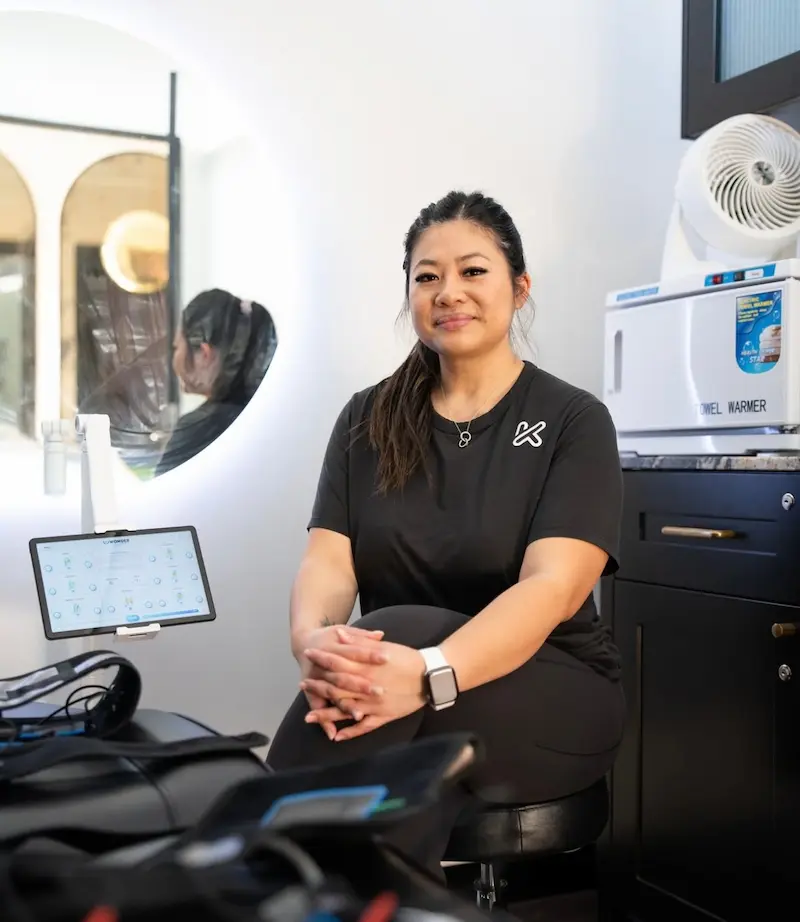
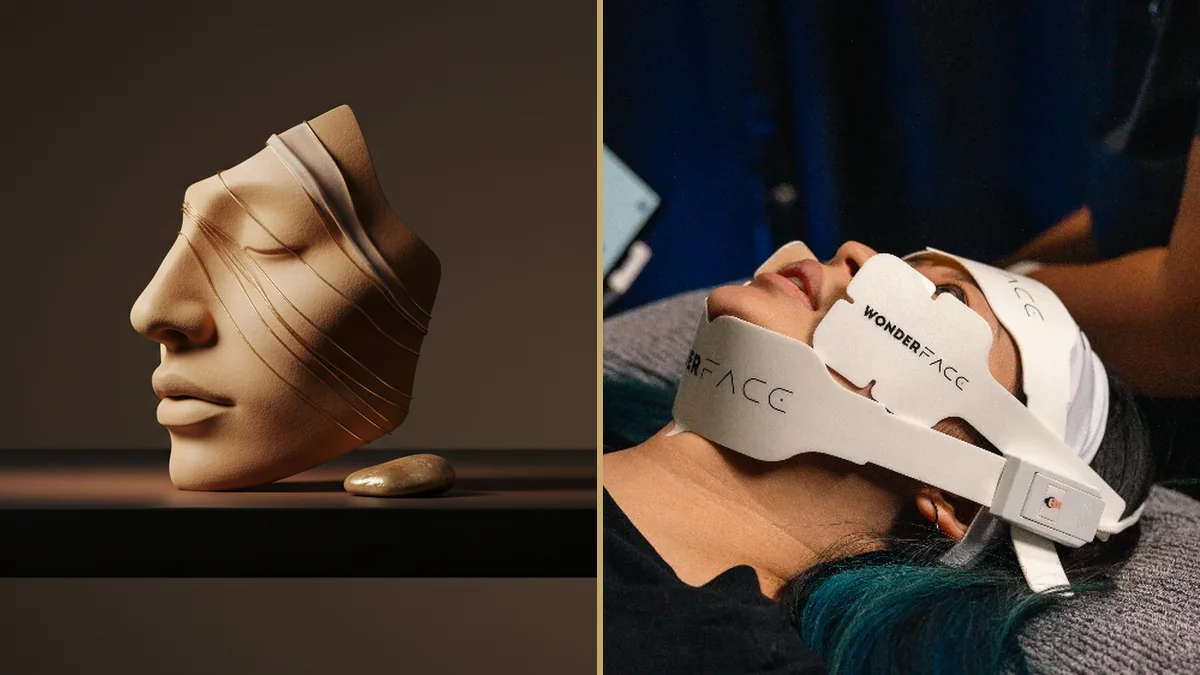
WonderFace, the facial device we run at Kaizen Therapy, works on two of those layers in the same session. A bipolar radiofrequency component heats the dermis to stimulate collagen and elastin, which firms and tightens the skin. A synchronised neuromuscular component delivers around 1,500 controlled contractions per session to the SMAS-layer facial muscles, the same layer a surgeon repositions in a facelift. It tones and lifts. It does not remove.
- 70% of subjects showed measurable jawline definition improvement (85-subject Perth trial)
- 75% showed mid-face and cheek lifting response in the same trial
- Up to 25% increase in measured muscle tone after 8 to 12 sessions
- 200+ subjects across 8 published studies in 7 countries
- Validated across Fitzpatrick skin types I to V, ages 25 to 70
- No serious adverse events recorded across any study
That is non-surgical jawline definition and lift in Melbourne, not fat removal. The two are not interchangeable. But if the outcome you actually want is a crisper, lifted lower face, it is worth understanding a non-permanent, no-downtime option before you sign up for surgery you cannot reverse. And if we look at your face and think a surgeon would serve you better, we will tell you that too. You can see the kind of change our face programs produce in our results gallery.
Cost and Program Structure
For comparison against the $4,000 to $6,000 surgical range above, here is what the non-surgical program costs at Kaizen Therapy:
- 6-Week Facial Rejuvenation: $1,699. 12 WonderFace sessions delivered twice weekly over six weeks, plus skin analysis, a treatment plan, progress photos at weeks 2, 4 and 6, and one bonus maintenance session. Available as a payment plan from $142 per week, and backed by our satisfaction guarantee.
- Ongoing maintenance from $199 per month. After the initial program, monthly memberships hold the result, with tiers up to twice-weekly sessions and no lock-in.
The price is only part of the difference. Surgery is one permanent event with a recovery and an irreversible outcome. The non-surgical program is a course of short sessions, no downtime, and if your face changes in ten years you adjust the plan. The full breakdown is on our pricing page, and your free 15-minute assessment is where we confirm whether it suits your face before anything is booked.
Frequently Asked Questions
Most Melbourne surgeons quote between $4,000 and $6,000 for buccal fat removal, though some clinics advertise from around $2,000 to $3,000. The headline figure is rarely the full number. Because the procedure is cosmetic, it attracts no Medicare rebate and no private health cover, and the quote often sits on top of separate anaesthetist fees, hospital or theatre fees, and post-operative garments and medication. A surgical consultation itself usually starts around $100. Always ask for an itemised quote that includes theatre and anaesthesia before you compare prices between clinics.
Yes. The buccal fat pads are removed surgically and do not grow back. But permanence works in both directions. If your face changes shape over the following decades, and every face does, the removed fat cannot be put back in any straightforward way. Fat transfer to rebuild lost volume is possible but it is a second surgery and the results are less predictable than people expect. The irreversibility is the single biggest reason experienced surgeons ask patients to think carefully before booking.
It can, and this is now the most discussed concern about the procedure. Facial fat naturally thins from around age 35 onward. If buccal fat is removed in your twenties or thirties, that natural loss stacks on top of the surgical loss, and the mid-cheek can look hollow or gaunt by your forties and fifties in a way that reads as older rather than slimmer. As the surrounding skin loosens and the bone changes with age, the absence of the fat pad becomes more visible over time, not less. A subtle over-reduction that looked sharp at 30 can look drawn at 45.
The clearest candidate is someone roughly 25 to 35 with genuine, persistent fullness in the lower cheek that stays the same regardless of body weight, at a stable weight, with a round or full mid-face and realistic expectations of a subtle change. Surgeons are open that only a minority of people who ask for the procedure actually fit that profile. It is not the right tool for general face slimming, for cheek fullness that comes and goes with weight, or for recreating a particular celebrity look. Anyone over about 45 is usually advised against it because facial fat is already receding at that age.
Yes. Under the cosmetic surgery reforms introduced by the Medical Board of Australia and AHPRA, a GP referral is required before you can book a consultation for a cosmetic surgical procedure, and buccal fat removal falls under that rule. The referral step exists partly to slow the decision down and make sure a doctor who knows your history has reviewed the plan. Treat it as a feature rather than a hurdle. It is a chance to talk through whether surgery is the right call at all.
No, and we will not pretend otherwise. WonderFace does not remove the buccal fat pad. No non-surgical device does, because the pad sits deep against the chewing muscle and only surgery can take it out. What WonderFace does is different work on different tissue. It combines radiofrequency heating that stimulates collagen in the skin with neuromuscular emissions that tone the SMAS-layer facial muscles, which improves jawline definition and lifts the mid-face. If what you actually want is a more defined, lifted lower face rather than the removal of cheek fat specifically, it is worth understanding that distinction before you commit to something permanent. If you genuinely have isolated buccal fat fullness and want it gone, a surgeon is the right call.