
If you have been searching for non-surgical body sculpting in Melbourne, two names keep coming up: fat freezing and EMS. They get advertised side by side, often by the same clinics, and on the surface they sound like they do the same job. They do not.
One of them destroys a layer of fat cells and leaves everything else alone. The other reduces fat and builds the muscle sitting underneath it, in the same session. That single difference, muscle, is the whole reason to read past the price list before you book. This post puts the two head to head: how each works, what each is genuinely good at, the risk nobody mentions in the consultation, and what they cost in Melbourne.
We run EMS, so we are not a neutral party. What follows is still an honest account of where fat freezing wins and where it does not, because sending the wrong person down the wrong path helps no one.
How Each One Actually Works
Fat freezing (cryolipolysis)
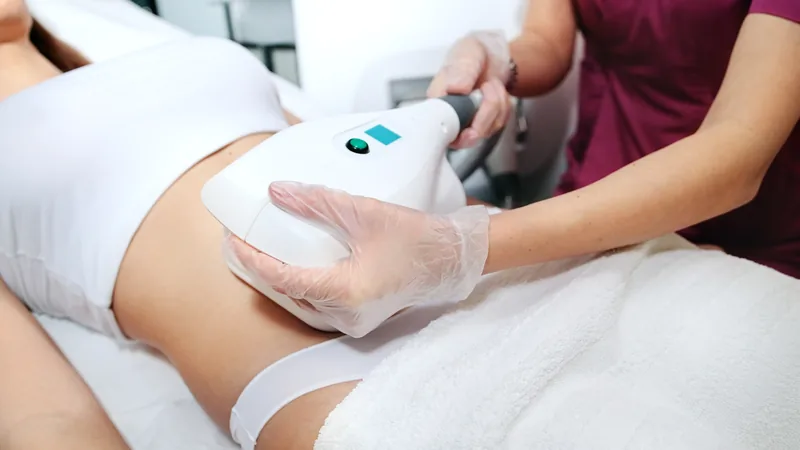
Fat freezing, the category behind branded devices like CoolSculpting, cools a localised area of fat to around −11°C. Fat cells crystallise at a higher temperature than skin, nerves and muscle, so the cold selectively pushes them into apoptosis, a controlled form of cell death. Over the following two to three months, your lymphatic system clears the dead cells and the fat layer in that spot gets thinner.
A suction applicator draws a section of tissue into a cup and holds it cold for the length of the session. The result is a genuine reduction in the number of fat cells in the treated area. But the mechanism only ever touches subcutaneous fat. It has no route to the muscle below, and no meaningful effect on the skin above.
EMS body sculpting (WonderAxon)
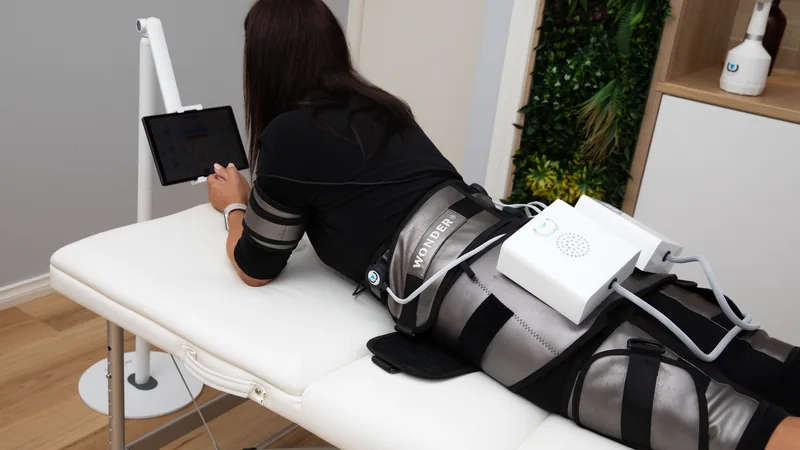
EMS works from the opposite direction. Instead of cooling fat from the surface, it uses high-intensity focused electromagnetic energy at 1.5 Tesla to drive the muscle directly. In a 25-minute session the WonderAxon device produces 36,000 to 52,000 supra-maximal contractions, contractions stronger than anything you can generate by choice, because the field bypasses the nervous system's normal safety limit on how hard a muscle will fire.
Running alongside that muscle work is bipolar radiofrequency at 500 kHz, which heats the subcutaneous fat while the contractions happen. So a single session does both things fat freezing misses: it reduces the fat layer through the RF heat, and it builds the muscle underneath through the contractile load. Fat down, muscle up, at the same time.
The Muscle Gap
Here is the thing most comparisons skate over. When people say they want a flatter stomach or a firmer, more defined shape, they are describing muscle as much as fat. The tone you see on a lean, athletic midsection is not just an absence of fat. It is the muscle underneath holding its shape.
Fat freezing can only ever subtract. It takes a fat layer away and hands you a smaller version of what was already there. If the muscle underneath has gone soft, from age, from pregnancy, from rapid weight loss, from years at a desk, removing the fat on top does not restore the structure. You end up smaller but not necessarily firmer.
EMS adds the part fat freezing cannot reach. The published data on the WonderAxon protocol shows fat going down and muscle going up in the same body, at the same time:
- Body fat index: −2.345 percentage points
- Muscle mass index: +2.0 percentage points
- Abdominal circumference: 5–15.5 cm reduction (mean ~10 cm)
- Waist circumference: average 5.35 cm reduction
- Results visible: from session 2 onward
- Patient satisfaction: 100% across all 7 studies
Those two top figures are the point of this whole article. Fat freezing can move the first number. It has no way to move the second. The researchers put it plainly:
"Results are much greater than heat or cold fat reduction treatments combined with extremely intensive physical training." — Barajas et al. (2022)
Overweight patients also showed more significant results with EMS, not less. That is the reverse of how thermal treatments like fat freezing behave, where the best results come on already-slim people with small, accessible fat pockets. EMS scales with your starting point rather than against it.
Not sure which one suits your body?
Book a free assessment. We'll scan your body composition and give you a straight recommendation, even if that's not us.
BOOK FREE ASSESSMENT →What Each One Is Actually Good At
Neither treatment is a scam and neither is magic. They suit different goals, and the honest split looks like this.
Fat freezing is the right call when
- You have one discrete, pinchable pocket of fat, a flank roll or a small lower-belly bulge, on an otherwise firm frame.
- Your skin tone and muscle tone in that area are already good, so subtraction alone gets you where you want to be.
- You want a set-and-forget approach to a single spot and don't mind waiting a couple of months to see it.
For that narrow use case, fat freezing does what it says. The efficacy data backs it: systematic reviews report roughly 20 to 25 percent fat-layer reduction in a treated area, with an average fat thickness reduction around 3.5 mm. That is a genuine result for a genuine, narrow use case.
EMS is the right call when
- You want tone and definition, not just a smaller measurement, because muscle is what creates the look you're after.
- You have more than one area to treat. A single EMS session covers the full treatment area instead of one applicator-sized patch.
- You've lost muscle along with fat, which is common after rapid or medication-assisted weight loss, and need to rebuild the structure underneath.
- You want to feel progress early and finish on a defined schedule rather than waiting months per cycle.
If you've come off a stretch of rapid weight loss, the muscle question is even more central. Our companion piece on body contouring after weight loss medication goes deeper on why fat-only treatments miss the mark for that group, and the Restore program is built specifically around it. For the wider field beyond these two, our four-way comparison of EMS, fat freezing, HIFU and cavitation lays out every option side by side.
What the Brochure Leaves Out
Fat freezing has a specific complication that rarely makes it into the sales conversation: paradoxical adipose hyperplasia, or PAH. Instead of shrinking, the treated area grows a firm, well-defined mass of fat, usually a few months after treatment. It does not go away on its own, and correcting it typically means liposuction or surgery, the exact invasive route people chose fat freezing to avoid.
How common is it? The device manufacturer has quoted around 1 in 4,000 cycles. Independent multicentre and review data puts the real number higher, in the range of 0.05 to 0.39 percent, and some pooled estimates run close to 1 in 50. It also shows a clear tendency to affect men more than women, despite fewer men being treated. Still uncommon. But real, without a reliable predictor, and worth knowing before you book.
The rest of fat freezing's side effects are temporary: numbness, redness, bruising and swelling in the treated area, occasionally a delayed ache. EMS, by contrast, reported no serious adverse events across all seven clinical studies. The only after-effects were transient skin redness that settles within minutes and a workout-style muscle soreness for a day or two. Different risk profiles, and the gap is not trivial when one of them can end in surgery.
Cost, Sessions and What You Get
Price is where the two treatments look closest on paper and diverge most in practice. Fat freezing is usually sold per applicator or per cycle. One applicator treats one area, and most areas need two or three cycles for a full result, so the bill grows every time you add a spot or a repeat. Treat two or three areas properly and the total climbs well past the sticker price of a single cycle.
| Factor | Fat Freezing | EMS (WonderAxon) |
|---|---|---|
| Reduces fat | ✓ | ✓ |
| Builds muscle | ✗ | ✓ |
| Tightens skin | ✗ | Mild (RF) |
| Area per session | 1 applicator | Full treatment area |
| Sessions needed | 1–3 per area | 24 (12 weeks) |
| Results visible | 2–3 months | Session 2+ |
| Known specific risk | PAH (fat regrowth) | None serious reported |
| Melbourne cost | Per applicator, x cycles | $2,399 or $200/week |
Fat freezing pricing varies widely by clinic and number of applicators. EMS pricing is Kaizen Therapy's published program rate as of mid-2026.
The EMS body sculpting program at Kaizen Therapy is a fixed structure: $2,399, or $200 a week over 12 weeks, for 24 sessions covering the full treatment area, with a Styku 3D body scan and a custom plan built in. You know the total before you start, every session works multiple areas at once, and you get both outcomes, fat reduction and muscle building, for that fixed total. Compared on cost per outcome rather than cost per session, that tends to land better than an open-ended stack of single-area freezing cycles.
The Honest Verdict
If your entire goal is to erase one small, stubborn pocket of fat on a body that already has the tone you want, fat freezing is a legitimate, well-studied choice. It is narrow, it is slow, and it carries a small but real regrowth risk, but for that one job it works.
For almost everything else people actually want from body sculpting, EMS is the more complete tool. A firmer midsection, definition, multiple areas, muscle rebuilt after weight loss: fat freezing has no mechanism for any of it, because it never touches the muscle underneath. Fat freezing subtracts. EMS reshapes. The word that separates them is muscle, and once you see the difference it is hard to unsee it.
The right answer still depends on your body, your goals and where your fat and muscle actually sit. That's what a proper assessment is for.
Frequently Asked Questions
It depends on what you mean by better. Fat freezing reduces the fat layer over your abdomen and does nothing else. EMS reduces abdominal fat and builds the rectus abdominis and oblique muscles underneath in the same session, which is what gives the stomach a flatter, firmer, more defined look rather than just a smaller measurement. If you have one small pinch of fat and firm skin with good tone already, fat freezing can handle it. If your abdomen has lost muscle tone, or you want definition rather than only volume reduction, EMS does the job fat freezing cannot.
Yes, for what it is designed to do. Systematic reviews put the fat-layer reduction in a treated area at roughly 20 to 25 percent measured by ultrasound, with an average fat thickness reduction of about 3.5 mm. That is a real, measurable result for a discrete pocket of fat. The limitation is scope, not effectiveness: fat freezing removes a fat layer and nothing more. It does not build muscle, it does not meaningfully tighten skin, and most areas need more than one cycle. So it works, but only on the one thing it treats.
Paradoxical adipose hyperplasia, or PAH, is a rare side effect of fat freezing where the treated area grows a firm, well-defined lump of fat instead of shrinking, usually appearing a few months after treatment. It does not resolve on its own and generally needs liposuction or surgery to correct. The device manufacturer quotes an incidence of about 1 in 4,000 cycles, but multicentre and review data put the real rate higher, in the range of 0.05 to 0.39 percent, with some estimates approaching 1 in 50. It also shows a strong tendency to affect men. EMS body sculpting has no equivalent risk: across seven clinical studies there were no serious adverse events, only temporary redness and muscle soreness.
You can run them in sequence, but there is limited reason to. EMS already reduces fat through its radiofrequency component while it builds muscle, so stacking fat freezing on top pays for a second treatment that overlaps with the fat side of what EMS is already doing, without adding anything on the muscle or tone side. If your only goal is to remove a single stubborn pocket that EMS has not fully cleared, a targeted fat freezing cycle can complement a program. For most people, one modality that covers fat and muscle is a cleaner and more cost-effective plan than paying for two.
Fat freezing in Melbourne is usually priced per applicator or cycle, and because most areas need two or three cycles and one applicator covers one area, the cost climbs quickly once you treat more than a single spot. EMS body sculpting at Kaizen Therapy is a fixed program: $2,399, or $200 a week over 12 weeks, for 24 sessions covering the full treatment area, plus a Styku 3D body scan and custom plan. Compared per outcome rather than per session, the EMS program covers more area and delivers both fat reduction and muscle building for a predictable total, rather than an open-ended per-cycle bill.
With fat freezing you wait. The frozen fat cells are cleared by the body gradually, so visible change typically takes two to three months per cycle, and if you need multiple cycles the timeline extends further. With EMS, most clients feel the muscles engaging from the second or third session and notice changes in how clothes fit within the first few weeks, with measurable circumference reductions clear by sessions six to eight. The full 24-session program over 12 weeks is where the published results were generated. EMS gives you earlier feedback and a defined finish line.